
Operating Room Transfer Stretcher TT-10
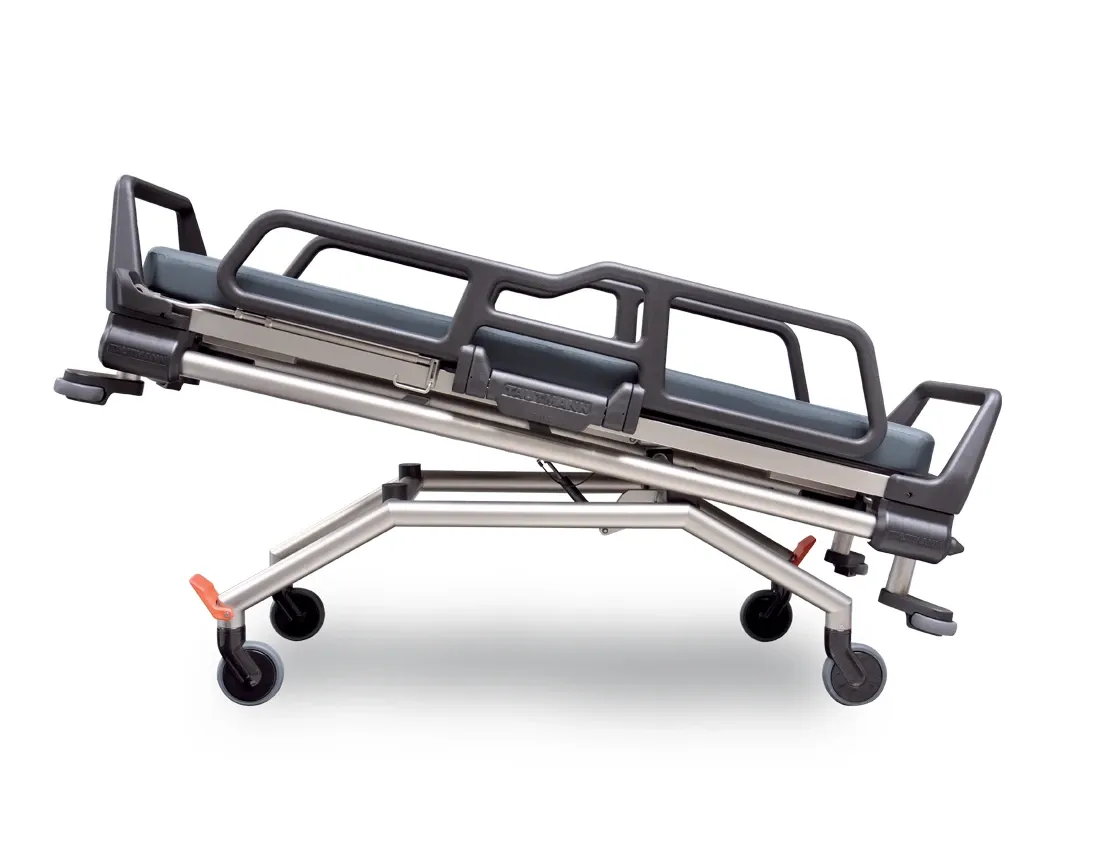
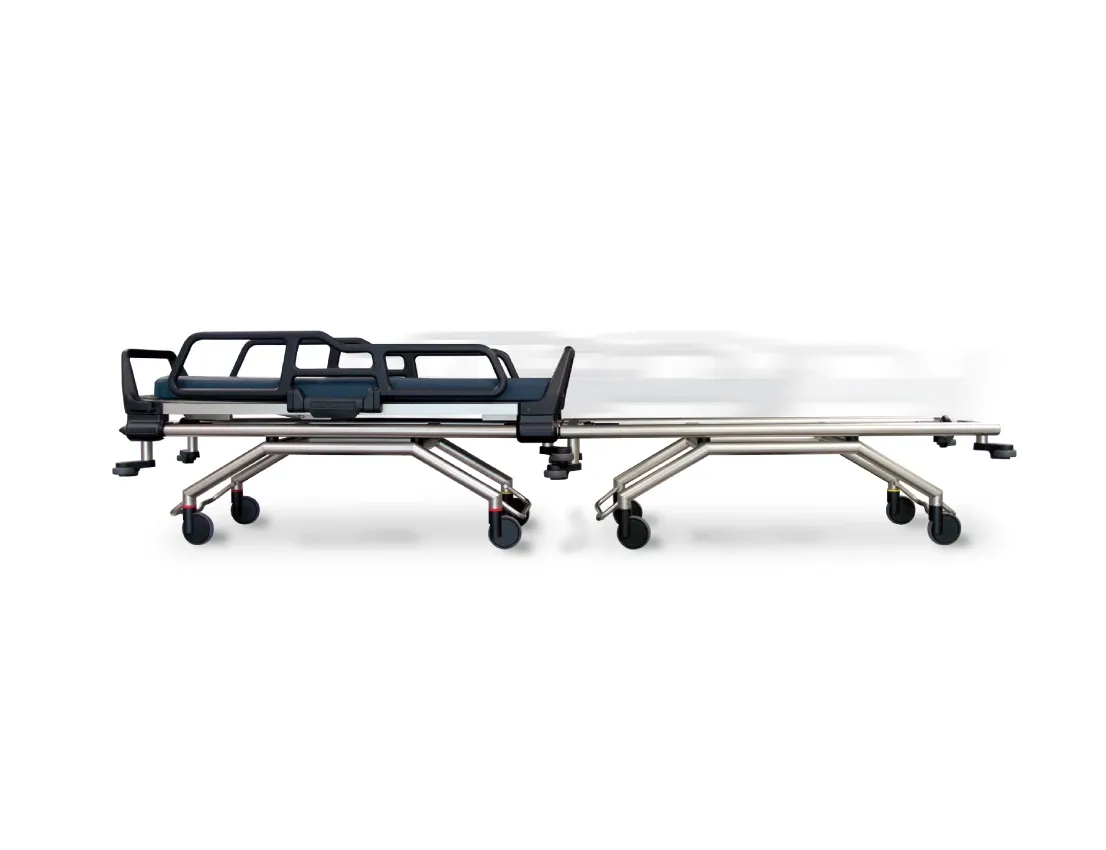
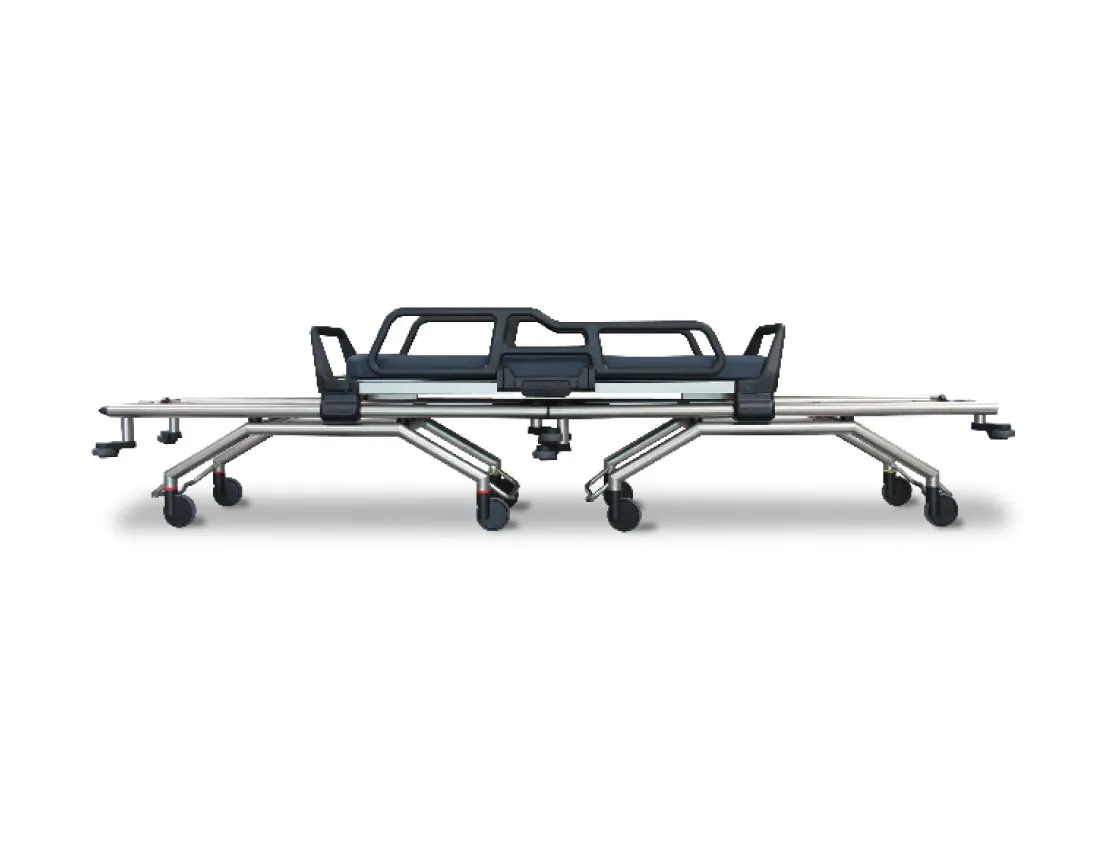
Moves the patient from the non-sterile hospital area into the sterile operating room. A patented locking mechanism docks two stretchers firmly together; the lying surface with the patient then slides from one stretcher to the other, without lifting and without the stretcher from the corridor entering the operating room.
Key facts
- Use
- Transfer between the non-sterile area and the operating room
- Docking
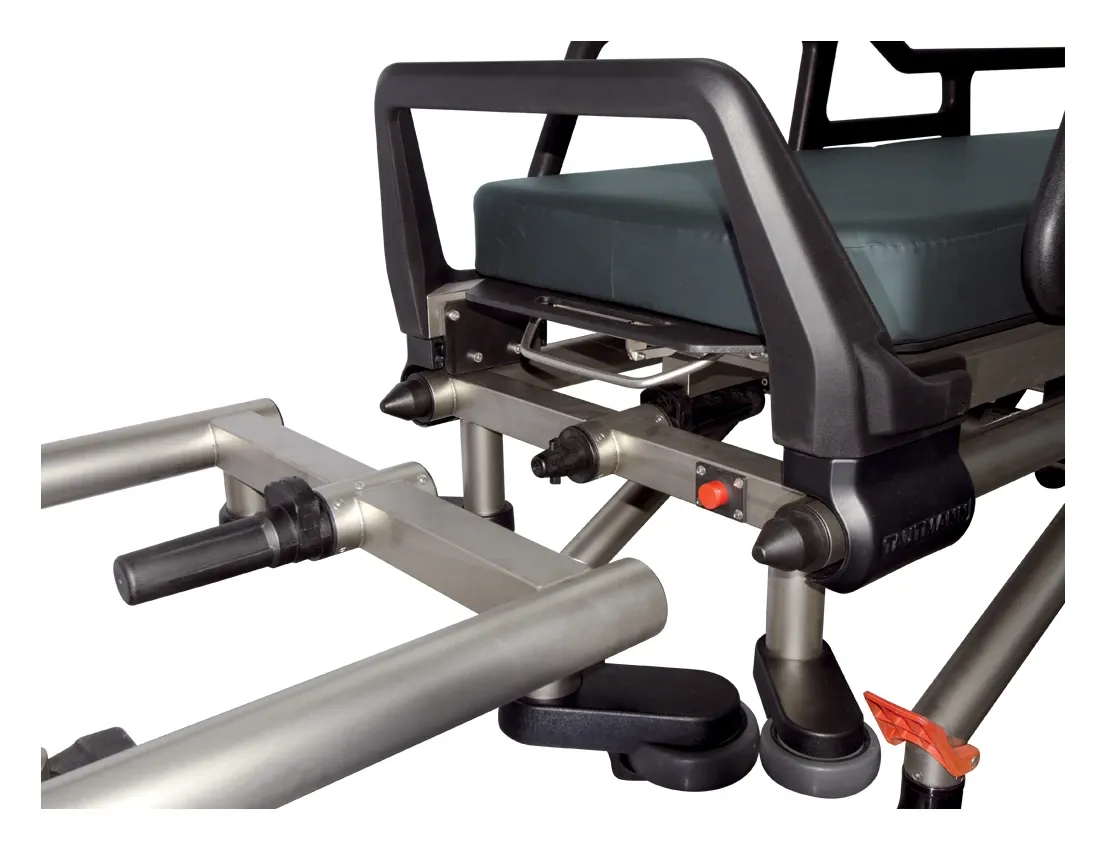
- Patented locking mechanism joins two stretchers
- Docked length
- 4050 mm (two stretchers)
- Single stretcher
- 2090 × 820 mm; lying surface 710 mm from the floor
- Option
- Trendelenburg movement on request
Specifications
| Overall length | 2090 mm (one stretcher); 4050 mm with two stretchers docked |
|---|---|
| Overall width | 820 mm |
| Lying surface length | 1915 mm |
| Lying surface and mattress width | 610 mm |
| Lying surface height from floor | 710 mm |
| Mattress | 1870 mm long, 100 mm thick; viscoelastic foam with fire-resistant waterproof cover |
| Docking | Patented locking mechanism; the lying surface slides between the two stretchers |
| Backrest | Adjustable |
| Side rails | Open with a circular movement |
| Bumpers | Polyurethane |
| Brakes | Brake pedals |
| Accessories | Height-adjustable IV pole; urine bag hook |
| Option | Trendelenburg movement |
Frequently asked questions
How does the transfer work?
Two TT-10 stretchers lock together with the patented mechanism. The lying surface with the patient slides from the corridor stretcher to the operating room stretcher.
Why does this reduce infection risk?
The stretcher used in the hospital corridors stays outside; only the operating room stretcher enters the sterile area.
Can the stretcher tilt?
Trendelenburg movement is available as an option on request.
Last updated: