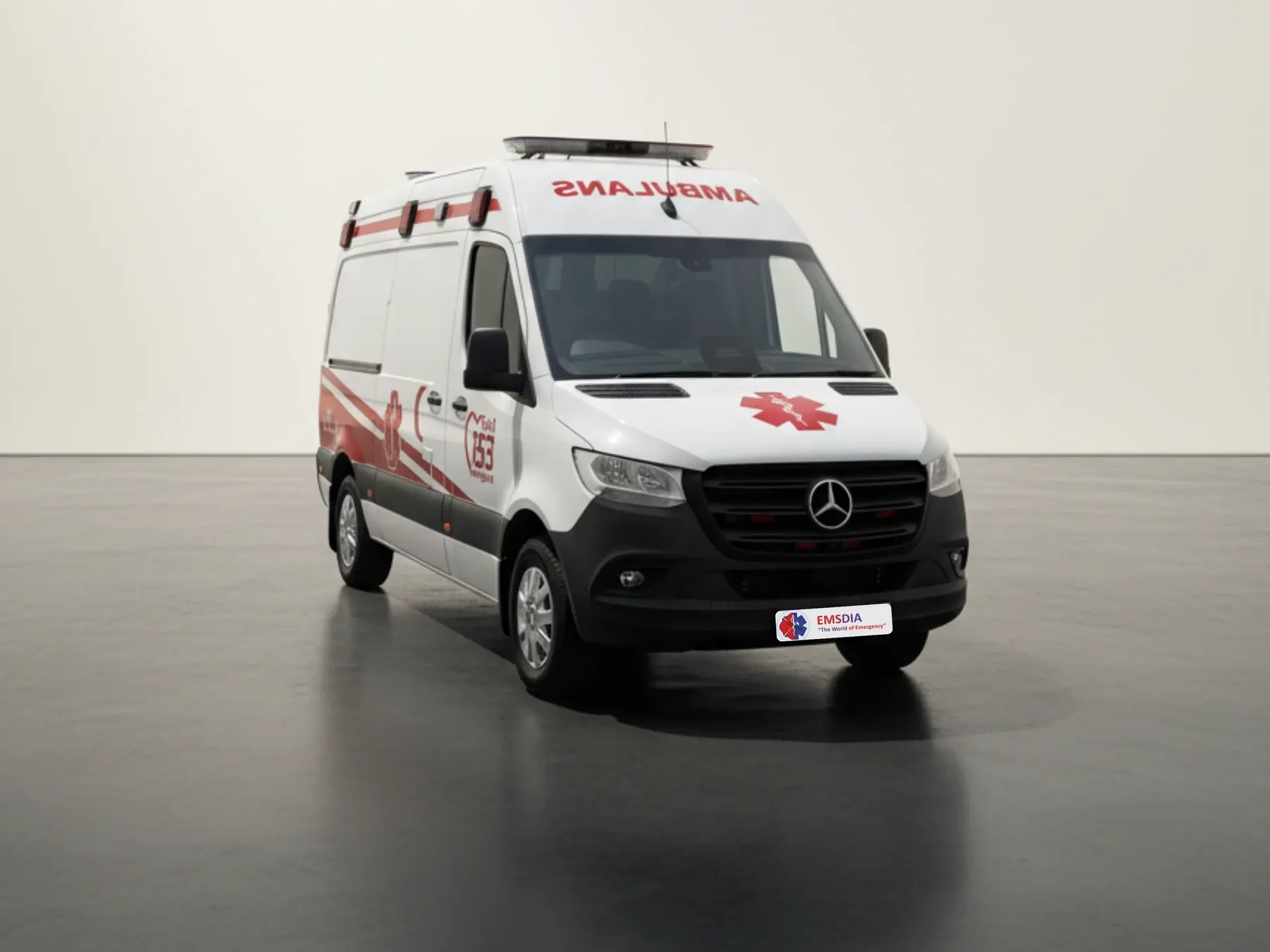
When a siren wails in the distance, most see a vehicle clearing traffic. However, in the realm of modern healthcare, that vehicle is the mobile frontline of a sophisticated life-saving network. To define an EMS (Emergency Medical Services) Ambulance today is to describe a high-tech clinical environment that brings the hospital’s capabilities directly to the patient’s side.
1. Defining the Clinical Shift: From Transport to Treatment
The fundamental role of EMS has evolved from a “transportation industry” to a critical branch of the healthcare system. According to the National Association of EMS Physicians (NAEMSP), EMS serves as the vital intersection of public health, public safety, and clinical medicine.
In a modern EMS unit, the goal is to initiate Definitive Care—such as cardiac pacing, advanced airway management, or intravenous pharmacology—long before the ambulance reaches the emergency department.
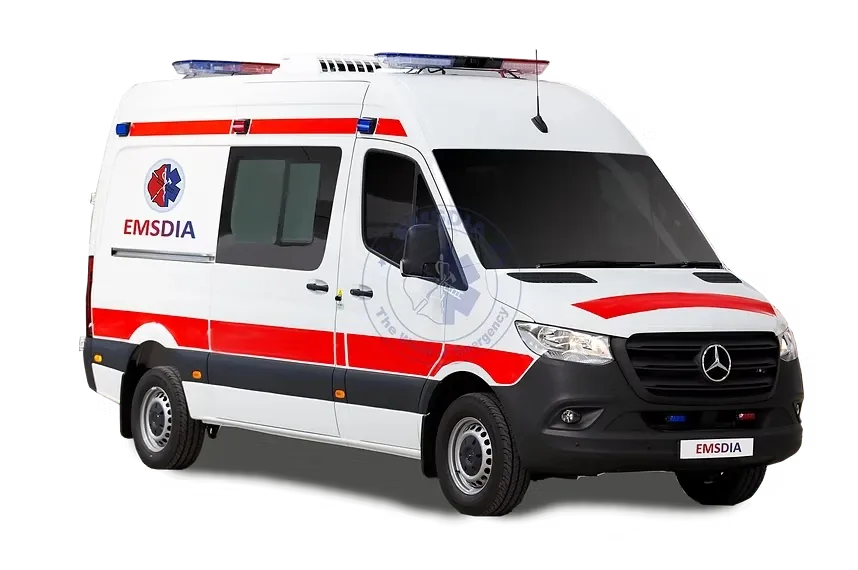
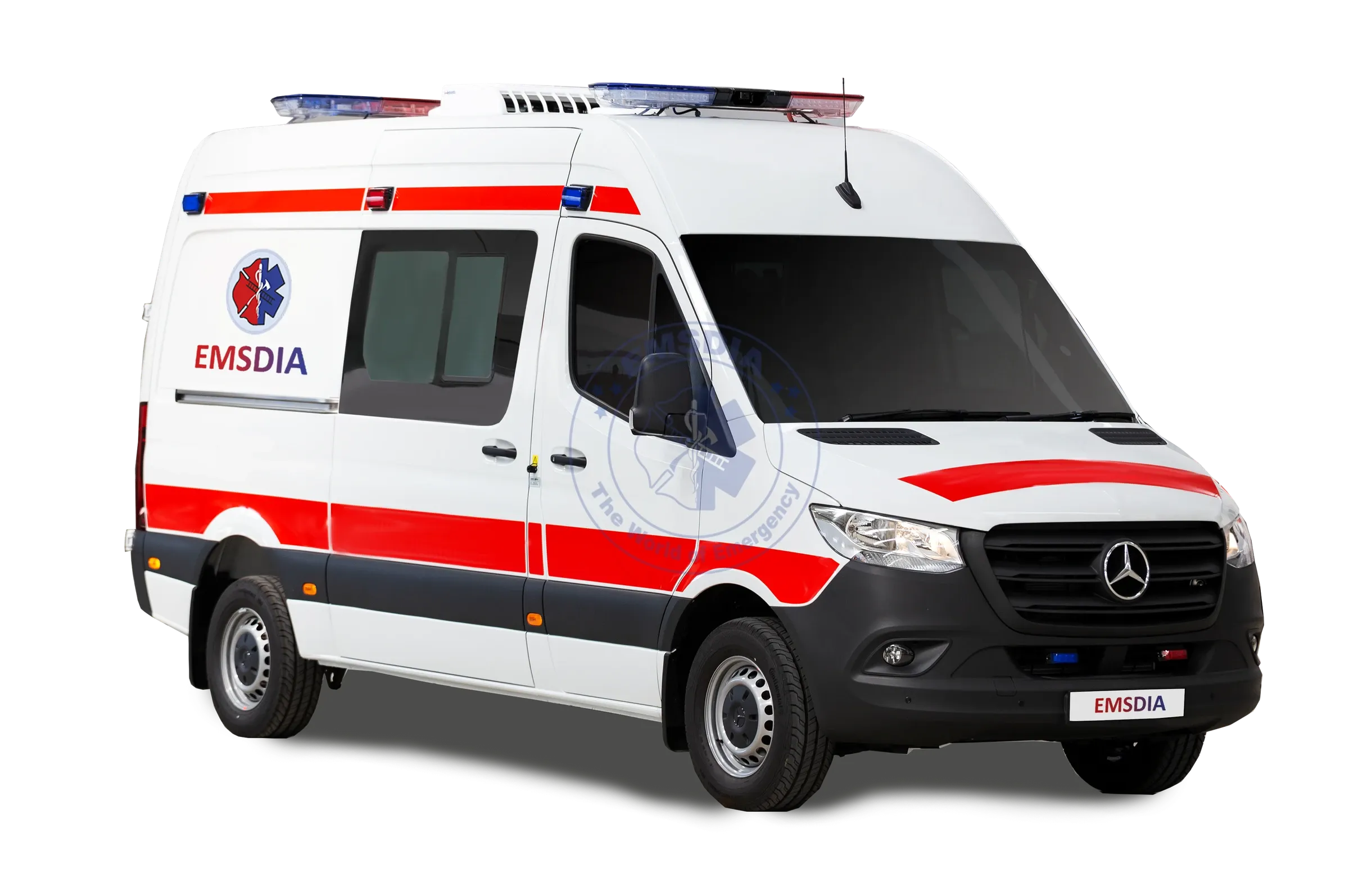
Ambulance markings must comply with EN 1789 standards
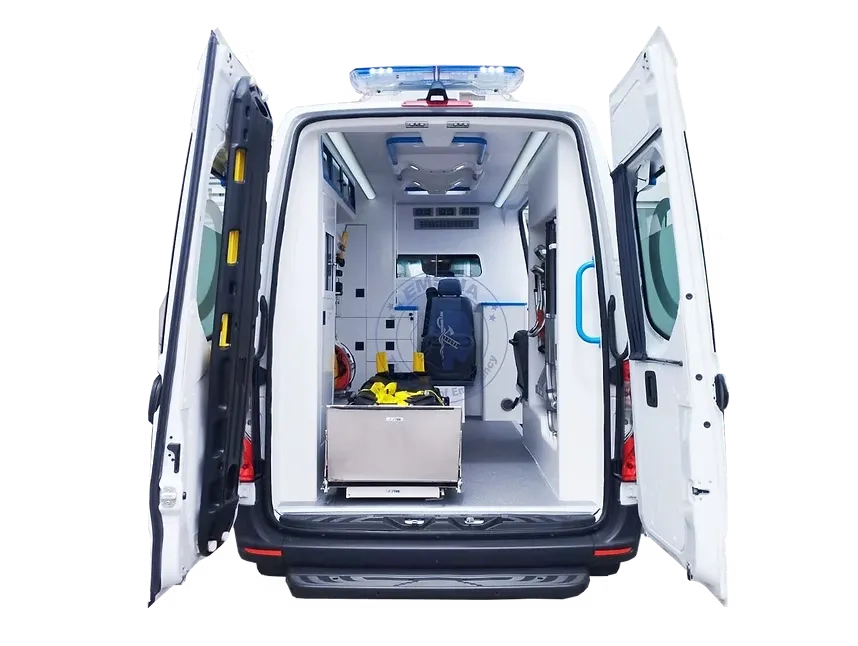
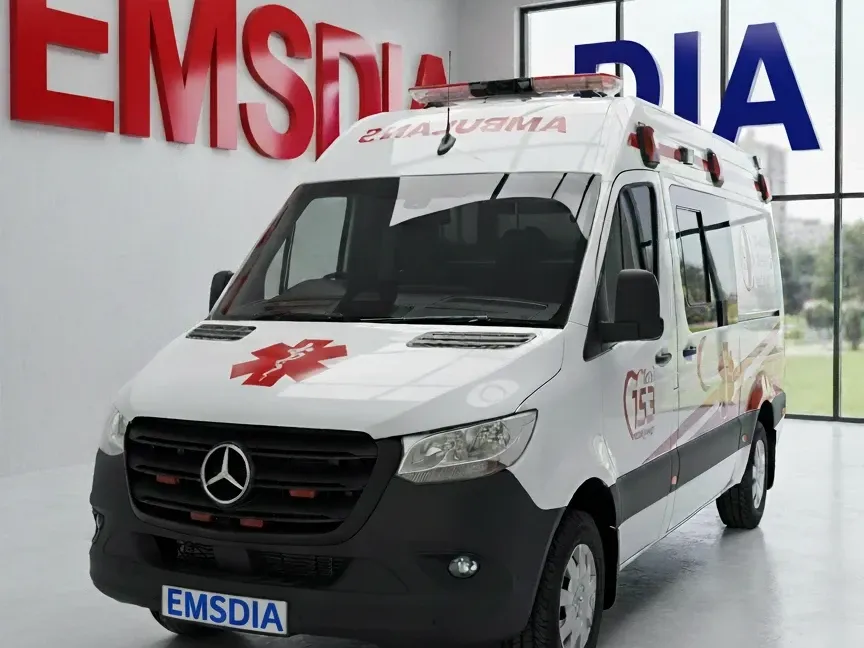
Interior of Mercedes Ambulance
2. The “Stay and Play” Paradigm
Historically, ambulances followed the “Scoop and Run” model. Today, clinical research supports a more stabilized approach for specific life-threatening conditions.
- The Concept: For out-of-hospital cardiac arrests (OHCA), the American Heart Association (AHA) emphasizes high-quality on-site stabilization.
- The Logic: Moving a critically unstable patient can induce “transport-related physiological stress.” By treating the patient in the controlled environment of an EMS ambulance first, survival outcomes are significantly improved.
3. The Digital Revolution: Tele-EMS and IoLT
In 2026, the EMS ambulance is a primary node in the “Smart City” infrastructure. It is no longer an isolated unit but a digitally integrated hub.
- Tele-EMS: Using high-definition streaming and real-time data, paramedics can conduct “Tele-Consultations” with neurologists or trauma surgeons while in transit. Research in the Journal of Telemedicine and Telecare indicates this can reduce “door-to-needle” time for stroke victims by up to 20 minutes.
- Internet of Lifesaving Things (IoLT): Advanced units automatically sync with hospital EMR (Electronic Medical Record) systems. While the ambulance is miles away, the hospital’s surgical team is already reviewing the patient’s live vitals and EKG.
4. High-Reliability Organizing (HRO)
Inside the cabin, the team operates under High-Reliability Organizing principles, a methodology borrowed from aviation safety.
- Closed-Loop Communication: Every medical order is repeated back to the lead clinician to ensure zero errors under stress.
- Crisis Human Factors: EMS crews are trained in Crew Resource Management (CRM), allowing them to manage chaotic environments with the same precision as a stationary operating room.
5. Frequently Asked Questions
Q: What is the main difference between an EMT and a Paramedic?
A: While both are vital, a Paramedic has more advanced training (ALS - Advanced Life Support) allowing them to perform invasive procedures, interpret EKGs, and administer a wider range of emergency medications compared to an EMT (Basic Life Support).
Q: Why is the “Golden Hour” so important in EMS?
A: The “Golden Hour” refers to the critical window of time following a traumatic injury where prompt medical intervention and surgical care offer the highest chance of preventing death or permanent disability.
Q: Can an EMS Ambulance perform a CT scan?
A: Yes, in specialized units known as Mobile Stroke Units (MSU). These are specific EMS ambulances equipped with portable CT scanners and lab equipment to treat strokes at the patient’s doorstep.
Conclusion: A Pillar of Public Health
The EMS ambulance is the most versatile tool in the modern medical arsenal. It is a system built on the pillars of speed, technology, and human expertise. As we look toward the future of healthcare, the EMS ecosystem remains the definitive bridge between the scene of an emergency and the hope of recovery.
Key References:
- American Heart Association (AHA) - 2025 Guidelines for CPR and ECC.
- National Association of EMS Physicians (NAEMSP) Position Statements.
- World Health Organization (WHO) - Emergency Medical Services Systems Guide.